Iran through Books - L.A. Times Festival of Books 2026
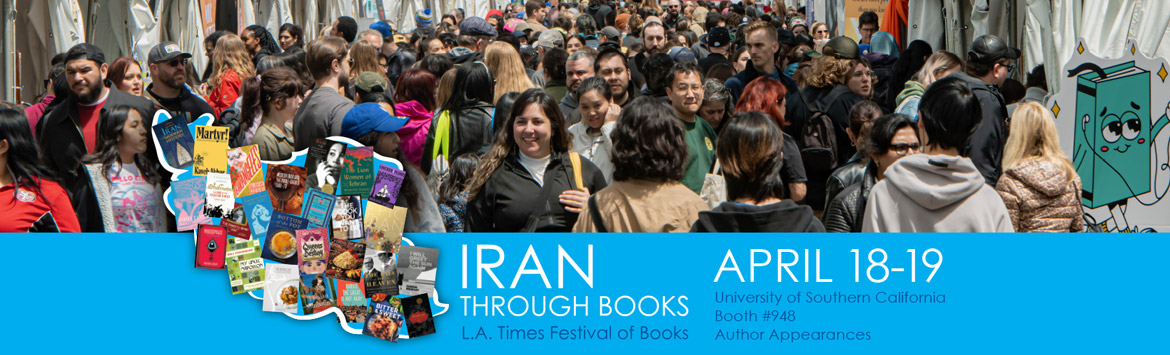
Join Farhang Foundation at
America's Largest Annual Book Festival
and Learn about
IRAN THROUGH BOOKS
We will be at booth #948
April 18-19, 2026
SAT 10am - 6pm
SUN 10am- 5pm
at the
Los Angeles Times Festival of Books
at USC
This event is FREE and open to all!

– Guest Author Appearances –

About Rashin Kheiriyeh
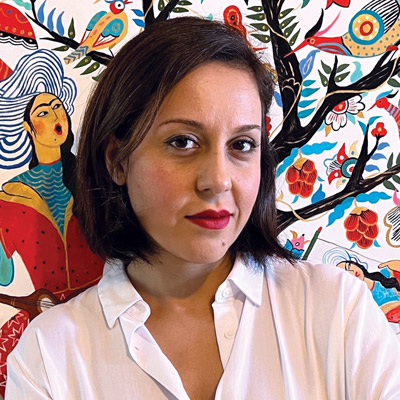
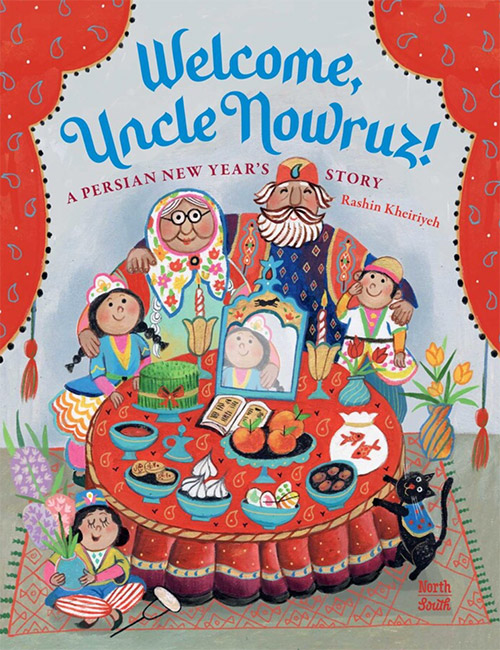
Rashin Kheiriyeh is an internationally acclaimed, award-winning illustrator, author, animator, and painter with over 25 years of experience in publication and broadcasting. She has published 100 children’s books in countries including the United States, Canada, France, Italy, Japan, Germany, Switzerland, the UAE, Ukraine, Turkey, Spain, South Korea, China, Brazil, India, and Iran.
Rashin has received 50 national and international awards, including a nomination for the 2023 and 2024 Astrid Lindgren Memorial Award for outstanding contributions to children's literature. Her accolades also include the 2022 Anne Izard Storyteller's Choice Award, the 2021 Sheila Barry Award for Best Canadian Picture Book of the Year, SCBWI Bologna Scholarship award, the 2017 Sendak Fellowship Award in New York, the 2009 New Horizon Award (RAGAZZI) from the Bologna Book Fair, the 2011 Golden Apple Award from the Bratislava Illustration Biennial (BIB), and the 2009 Crystal Simorgh Award from the 28th FAJR Film Festival in Iran.
Rashin is also the character artist for the popular Iranian animation series Sugarland/Shekarestan, which airs on national TV in Iran.
Education
PhD-equivalent Degree in Illustration, Ministry of Art and Culture, Iran.
Certificate of Completion, Printmaking, School of Visual Arts, SVA, New York.
MFA, Graphic Design, Alzahra University, Iran.
BFA, Graphic Design, Azad University, Arts and Architecture, Iran.
Diploma, Graphic Design, Azadegan Fine Art School, Iran.
Work Experience
Lecturer/Faculty, Department of Art
University of Maryland, College Park, MD
Discover Rashin Kheiriyeh
 |
About Ciruce Movahedi-Lankarani
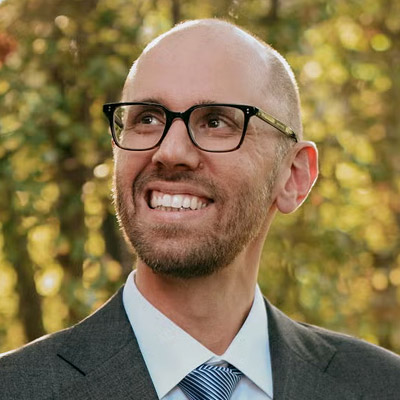
Ciruce Movahedi-Lankarani is the Farhang Foundation Early Career Chair in Iranian Studies and Assistant Professor of Middle East Studies and Environmental Studies at the University of Southern California. Ciruce studies modern Iran, focusing on the country’s recent history through the interwoven perspectives of technology, development, and the environment.
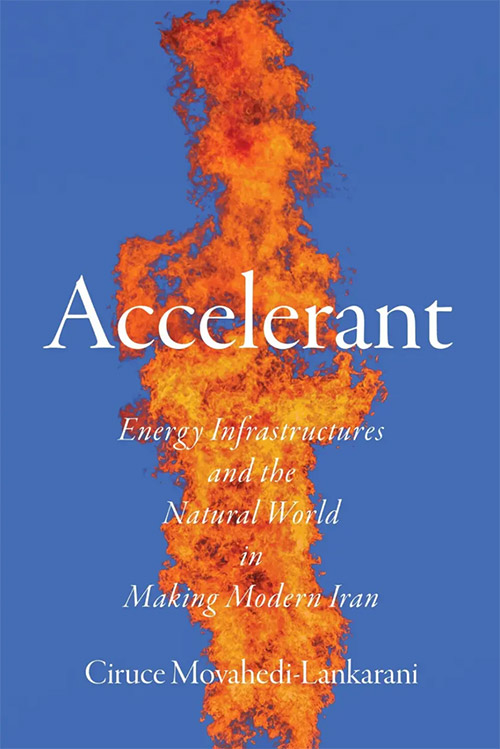
Ciruce’s first book, titled Accelerant: Energy Infrastructures and the Natural World in Making Modern Iran (Stanford: Stanford University Press, 2026), studies the history of natural gas in twentieth-century Iran. It follows the movement of the resource from underground reservoirs through infrastructures of refining and distribution into everyday life, in the process tracing the interconnections of development planners, oil firms, industrialists, engineers, consumers, mountain ranges, sedimentary rock layers, and natural gas itself. At the heart of the book is an exploration of how the material properties of Iran’s vast natural gas resources, Iran’s topography and geology, and the infrastructures used to exploit fossil fuels all influenced competing notions of progress, modernity, prosperity, and the environment in the country during a period of self-conscious modernization. Drawing upon perspectives in Middle Eastern history, energy history, science and technology studies, and political ecology, the book contributes to our knowledge of development in modern Iran, the creation of fossil fuel energy systems in the Global South, and the role of resource nationalism in the creation of intensive hydrocarbon energy regimes. By linking debates on environmental change to the politics of resource extraction in Iran, Accelerant sheds light on the sociopolitical significance of energy infrastructures in the creation of industrialized societies in the modern Middle East.
Ciruce’s second research project addresses petrochemicals and their place in the construction of industrialized lifeways and environments in Iran and the Global South. Eschewing the focus on energy and revenues that has marked much of the scholarship on petroleum, the project seeks to understand how Iranian petrochemicals have shaped both the country’s own development as well as those societies to which they were exported. More than an account of an industry and its political economy, I aim to shed light on the largely untold history of the petrochemical-saturated world we inhabit, studying how people in Iran and elsewhere have come to depend upon—even desire—industrialized cycles of life and death that are structured by petroleum-based fertilizers, plastics, and pharmaceuticals.
Reflecting the fact that Iran’s petrochemical industry was established with an explicit eye toward exports, with this project I aim to put the country at the center of a global framing that traces the streams of expertise, finance, and chemicals that have connected it to other regions. Such cross-border flows meant that petrochemicals’ shaping of Iranian lifeways occurred in conjunction with their influence in other societies, links that require a transnational viewpoint to understand. It is a perspective that not only accounts for the involvement of firms of wealthy states like the United States and Japan, but also the South-South connections that Iran’s petrochemical exports have formed with places like India, Turkey, and Tanzania. It further reflects my interest in considering Iran not as a peripheral supplier of oil in the construction of the modern world, but as an integral and influential part of global process that have led to the formation of contemporary societies.
Ciruce’s research reflects not only his interests in Iranian history and the environment, but also his training and professional experience in engineering. Through those experiences he developed an appreciation for peoples’ varied interactions with technology and his work seeks to explore the historically contingent ways they have encountered, adopted, adapted, translated, and rejected technologies in both practical and ideational terms. In emphasizing the environmental contexts in which such events were embedded, he studies how imaginaries of technology and the environment in the Global South have had and will have profound implications for people and societies in the region, humanity as a whole, and the natural world.
Ciruce’s work has been supported by the National Endowment for the Humanities and the Social Science Research Council.
Discover Ciruce Movahedi-Lankarani
|
About Banafsheh Sayyad

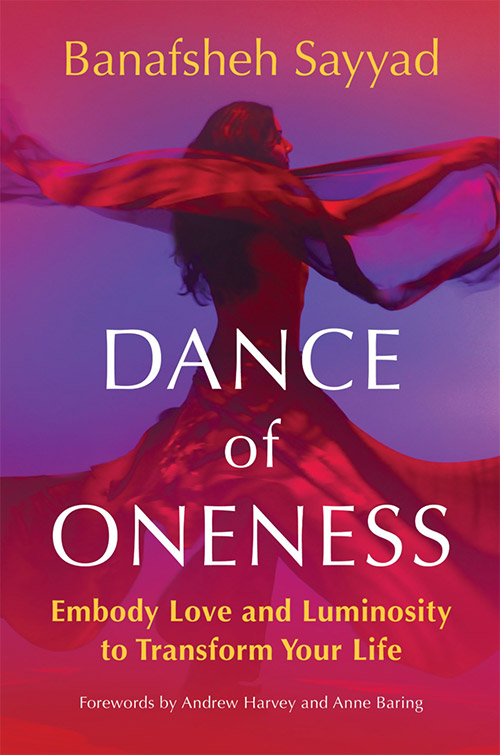
Banafsheh Sayyad is an internationally acclaimed sacred dancer, choreographer, and transformational teacher, and the founder of Dance of Oneness®. Born in Iran into a lineage of pioneering artists, she is the daughter of legendary filmmaker Parviz Sayyad. Banafsheh has devoted her life to exploring dance as a path of devotion, healing, and spiritual awakening, empowering thousands around the world to embody love through movement.
A trailblazer in contemporary mystical dance, Banafsheh is known for her groundbreaking fusion of Persian dance, Sufi whirling, Flamenco, and Taoist movement practices. She is among the few artists to create a liberated feminine expression of Sufi dance, transforming a tradition historically performed by men into a powerful embodiment of the Divine Feminine.
She holds an MFA in Dance and Choreography from UCLA, where she also taught Persian dance, and is a recipient of the James Irvine Foundation award. In addition to her artistic work, Banafsheh is an acupuncturist and herbalist, integrating principles of Chinese medicine and energy systems into her teaching.
Through her performances, international workshops, and her company NAMAH, Banafsheh has presented work across North America, Europe, and Australia. Her pioneering practice, Dance of Oneness®, weaves together movement, wisdom teachings, and healing modalities, offering a transformative pathway for individuals to reconnect with their bodies, awaken consciousness, and live with passion, presence, and reverence.
Discover Banafsheh Sayyad
|
About Sholeh Wolpé

Sholeh Wolpé is a poet, writer, and librettist. She was born in Iran, writes in English, translates from Persian and lives in Los Angeles and Barcelona. Her literary work includes seven collections of poetry, several plays, five books of translations and three anthologies, as well as texts and librettos for the choir and opera. She is the Writer-In-Residence at the University of California, Irvine.
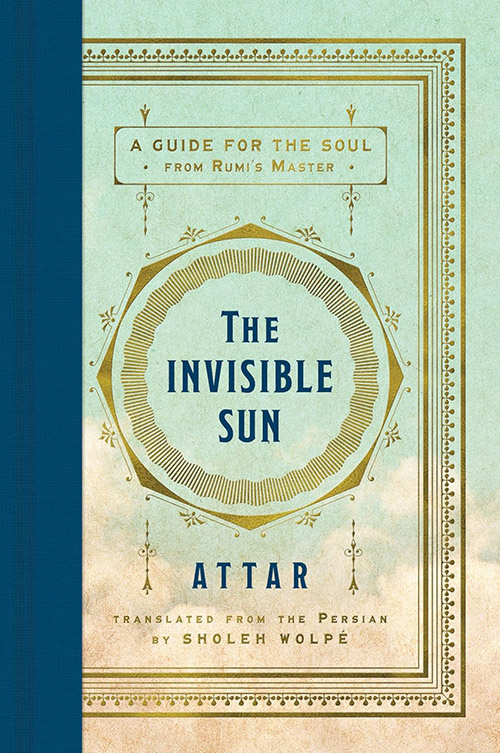
Her most recent work include The Invisible Sun – Attar (Harper Collins, long-listed for PEN Translation Award), Abacus of Loss: A Memoir in Verse (University of Arkansas Press), Abaco de Perdida (Visor Libros, España), Song of Exile for choir and Nava Avaz, a full length opera for 6 composers (premiere 2027). Her translations of Iranian poetry, in particular 12th century Sufi mystic poet Attar, and 20th century Iranian rebel poet Forugh Farrokhzad have garnered awards and established Wolpé a as a celebrated re-creator of Persian poetry into English.
She is the recipient of Opera America Discovery Award as well as a PEN/Heim, Midwest Book Award, and the Lois Roth Translation Prize. Her book, The Invisible Sun, was on PEN America award 2025 Long List. She is the Writer-In-Residence at the University of California, Irvine (UCI). She has lived in Iran, Trinidad, and United Kingdom and presently divides her time between California and Barcelona.
Prism International writes that in Wolpé’s memoir in verse, Abacus of Loss, “desire and love exist in terrifying worlds” yet they are handled with “silken language.” Abacus of Loss was chosen by The Mary Sue magazine as one of “8+ Beautiful, Contemporary Novels Written in Verse That Make Poetry Accessible,” and was hailed by Colorado Review as a book that “examines the masks of patriarchy in powerful metaphor and narrative.”
Her translations of Iranian poetry include: The Forbidden- Poems from Iran and Its Exiles (Michigan State Univ. Press), The Conference of the Birds (W.W. Norton & Co), The Invisible Sun (Harper Collins) and 20th century Iranian rebel poet Forugh Farrokhzad, Sin: Selected Poems of Forugh Farrokhzad (Univ. of Arkansas Press).
As lyricist/librettist, she has written for Fahad Siadat (U.S), Ramin Amin Tafreshi (Netherlands), Huba de Graaf (Netherlands), Aida Shirazi (Canada), Sahba Motallebi (U.S./ Iran), Niloufar Nourbakhsh (U.S.), Sahba Aminikia (U.S./ Iran), Shawn Crouch (U.S.), and Chris Gordon (U.S.) among others.
Wolpé wrote the libretto for The Conference of the Birds—A Movement-Driven a Cappello Oratorio, composed by Fahad Siadat, and Choreographed by André Megerdichian. It premiered at the Broad Stage in Los Angeles in June 2022 to sold out audiences. Her new libretto, Nava Avaz, was the recipient of 2025 Opera America Discovery Grant.
Wolpé’s multi-discipline performance piece The Seven Valleys combined poetry, dance, music and projection art. It was commissioned by The Getty Villa Museum and performed there on July 16, 2022.
Wolpé’s plays have been produced by Oakland Theater Project, Inferno Theater, Northern Illinois University, and The Alternative Theater company, among others, and have been finalists and semifinalists at Bay Area Playwrights Festival, Eugene O’Neill National Playwrights Conference, Centenary Stage Women Playwrights, Ojai Playwrights Festival, and Ashland New Plays Festival. Her play LET ME IN is among Theaterfolks’ top ten plays requested by schools. Her play SHAME is one of the features plays in New Iranian Plays, published by Auroa Metro books (2022) and was shortlisted for the Cooper Prize in Australia.
Sholeh has performed her literary work with world-renowned musicians at Quincy Jones Presents series at The Edye, Skirball Cultural Center Series, Los Angeles Aloud, The Broad Museum, LA County Museum of Art Ahmanson stage, Singapore Literature Festival, UNSW School of Arts and Media theater in Sydney, Jaipur Literature Festival, Kala Khoda Festival in Mumbai, Tasmania Art Center, Brisbane jazz stage, as well as other venues in China, Spain, India, UK, the US.
Sholeh is married to sociologist Edward Telles.
Discover Sholeh Wolpé
|
Help support Farhang Foundation’s free programming!
Event Details
| Event Starts | 04/18/2026 |
| Event Ends | 04/19/2026 |
| Individual Price | Free |
| Location | USC |